
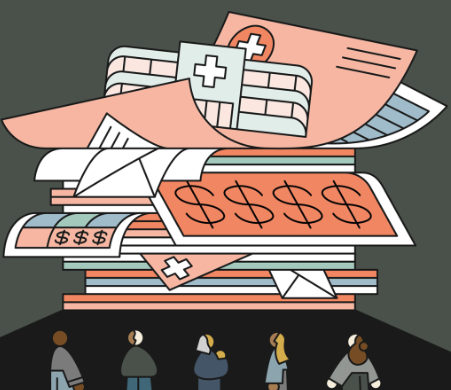
Most Americans are taught that health insurance protects them from financial catastrophe. However, Medical Debt can still occur, and the reality is much more complicated.
Why Do So Many Americans Have Medical Debt Even When They Have Health Insurance?
Imagine a family of four. They have health insurance through their job. Every month, hundreds of dollars come out of their paycheck for coverage.
Then someone has a serious accident. The family assumes insurance will take care of the bills. However, they receive thousands of dollars in charges and must spend down savings. They miss work and put expenses on credit cards, and they begin accumulating medical debt.
Readers may wonder how out-of-network charges, deductibles, and limits leave families with large costs. How does this happen when they have insurance?
However, the answer lies in understanding how the American healthcare system actually works.
Most Americans Have Insurance
But that doesn’t mean you’re protected from Medical Debt…
The central challenge of American healthcare is not simply that some people lack insurance. In fact, most Americans are insured! In 2024, approximately 92% of Americans (310 million people) had health insurance for some or all of the year, while 8% were uninsured. [census.gov], [shadac.org]
The bigger story is that most Americans have insurance, yet millions still face significant medical costs and financial stress due to out-of-pocket expenses, which can lead to Medical Debt.
Insurance Coverage ≠ Financial Protection
What We Think It Does
Have Insurance
↓
Medical Emergency
↓
Insurance Pays Most of the Costs
↓
Recover
What Actually Happens
Have Insurance
↓
Medical Emergency
↓
Deductible + Coinsurance +Prescription Costs + Lost Income
↓
Financial Stress
Why Healthcare Is So Hard to Understand
Can you confidently explain:
- Premiums?
- Deductibles?
- Coinsurance?
- Network restrictions?
- Prior authorization?
- Explanation of Benefits statements?
- Out-of-pocket maximums?
MANY cannot….
The complexity becomes a barrier.
Few financial products require consumers to spend tens of thousands of dollars while understanding so little about what they are purchasing.
Why is Health Insurance different?
The Healthcare Terms Nobody Teaches
What It Is:
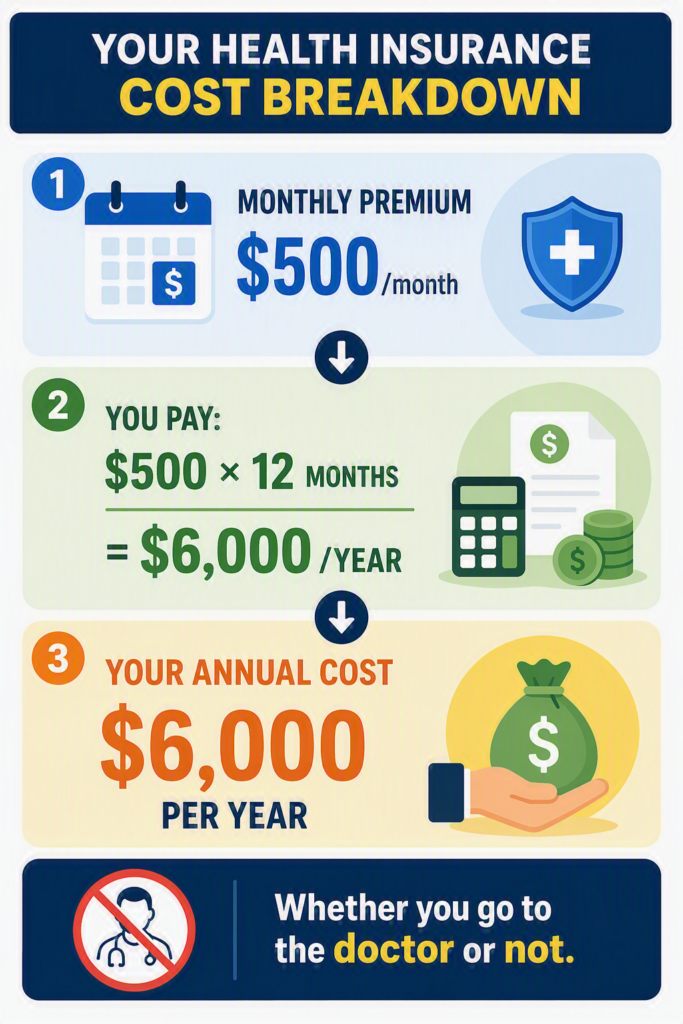
The amount you pay each month to keep your health insurance active.
Plain English
It is like a subscription fee for health coverage.
What It Is:
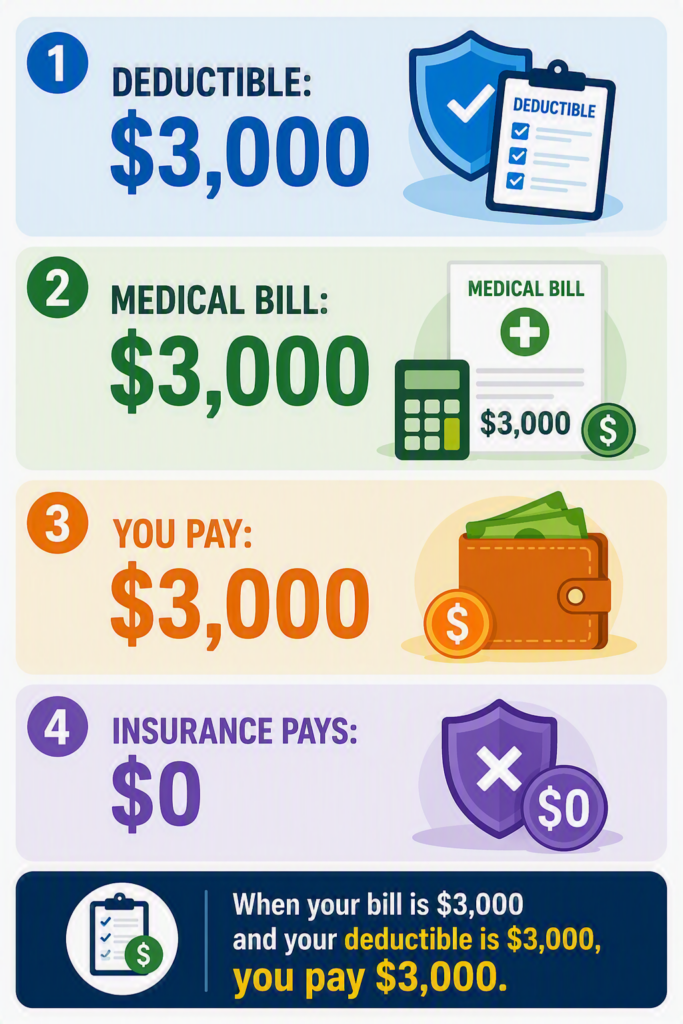
This is the amount you must pay out of your own pocket; however, insurance starts sharing more of the costs.
Plain English:
Your “entry fee” comes before insurance.
Thus, it begins helping.
What It Is:
The amount you must pay out of your own pocket before insurance starts sharing more of the costs.
Plain English:
Your “entry fee” before insurance really begins helping. The charge can start accruing before coverage kicks in.
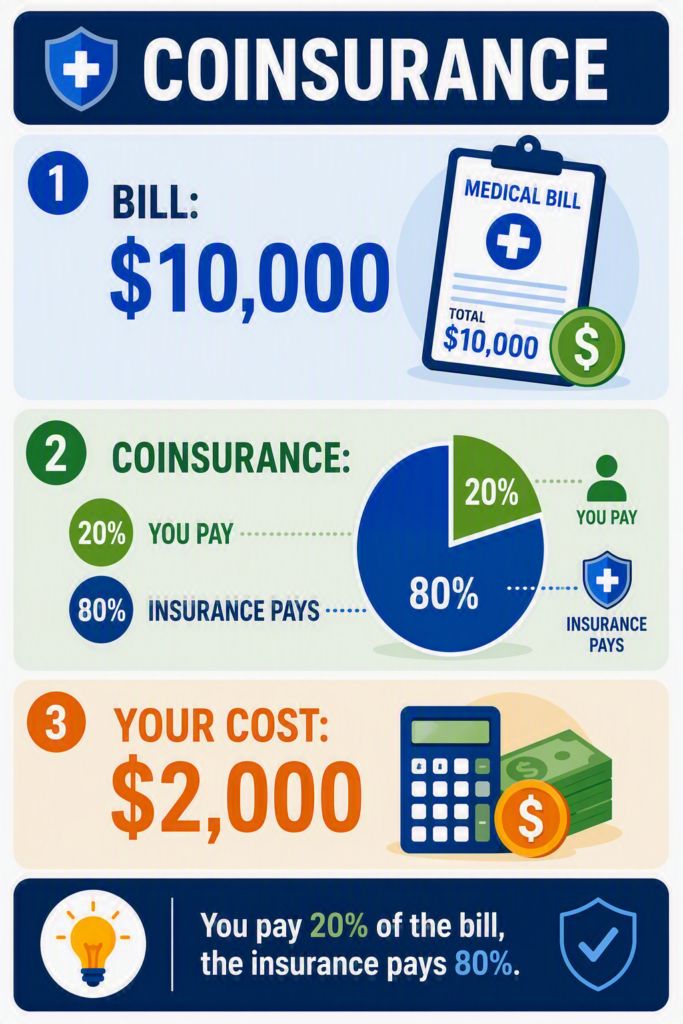
What It Is:
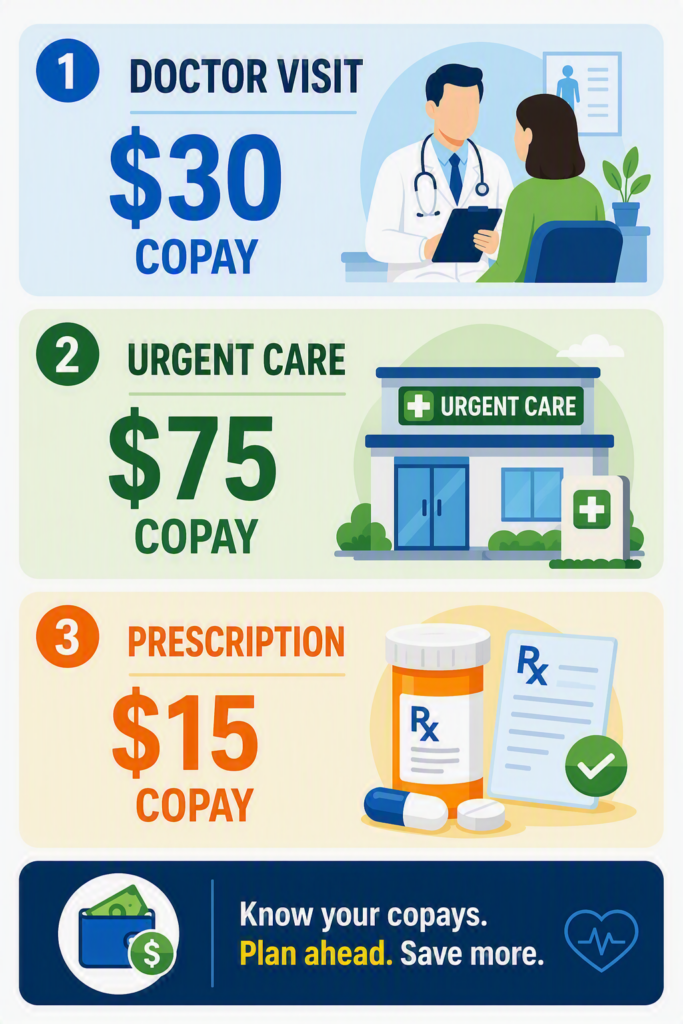
Specifically, this is the portion of a medical bill you pay after meeting your deductible.
Plain English:
You and the insurance company split the bill.
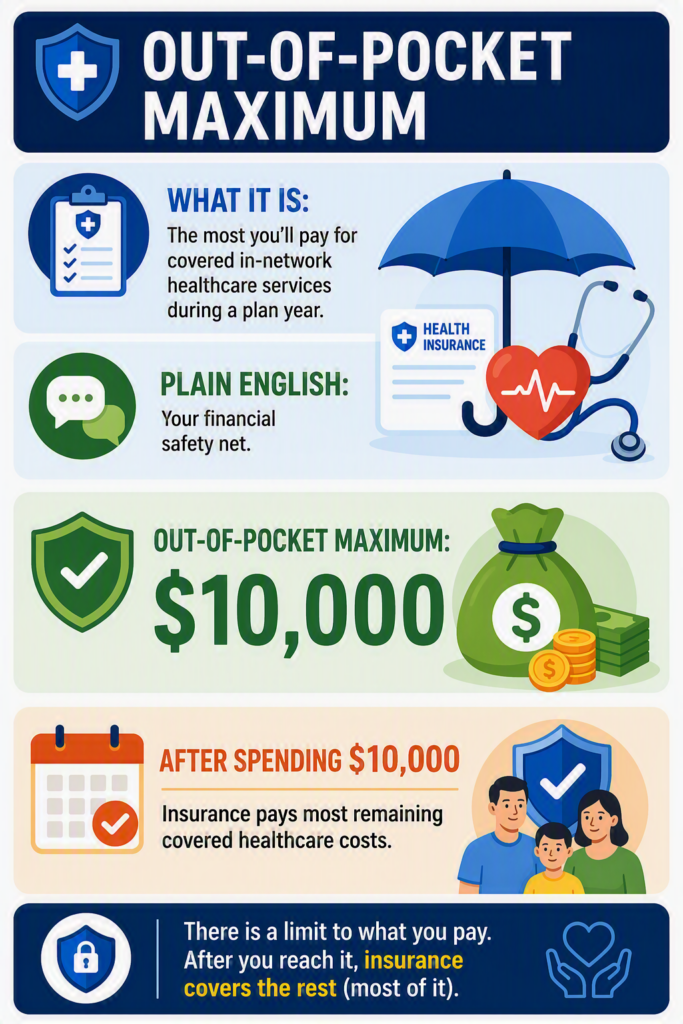
What It Is:
The most you will pay for covered in-network healthcare services during a plan year.
Plain English:
Your financial safety net. Once this is reached, Insurance pays all healthcare costs.
Why Insured Families End Up in Debt
High Deductibles
Many plans require thousands of dollars before insurance pays a substantial portion.
Cost Sharing
Even after the deductible is met, patients often continue paying through coinsurance. Co-pays remain a burden as well.
Lost Income
Medical problems create reduced work hours, FMLA/Disability leave, and care-giving burdens.
Chronic Conditions
Lasting effects create costs that accumulate over years rather than from a single event.
Prescriptions
Many medications continue generating bills long after a hospital stay.
The Numbers – U.S. Health Insurance & Medical Debt in America
Coverage is Widespread
92% of Americans have health insurance.
54% receive coverage through an employer.
19.1% are covered by Medicare.
17.6% are covered by Medicaid.
Healthcare Costs Remain High
Average annual family premium: $26,993
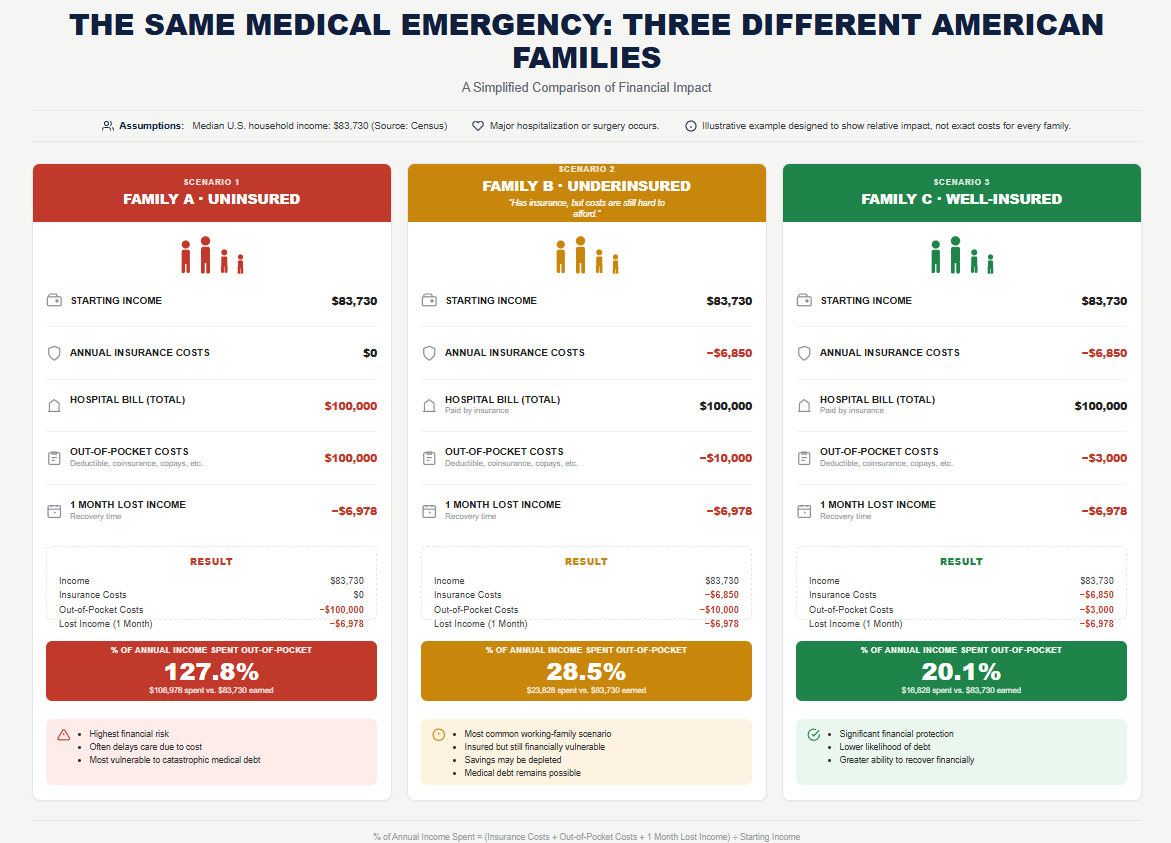
Average worker contribution: $6,850 per year
Nearly 1 in 2 adults report difficulty affording healthcare costs.
Medical Debt Is a National Crisis
Americans owe at least $220 BILLION in medical debt.
100+ million Americans are burdened by healthcare debt or unaffordable medical bills.
41% of adults report having healthcare debt.
More than 50% of adults have gone into debt from medical or dental bills in the last five years.
How Much Medical Debt Do Americans Carry?
14 million people owe more than $1,000.
3 million people owe more than $10,000.
Nearly 1 in 5 people with healthcare debt do not expect to fully repay it.
Cost Forces People to Delay Care
36% have delayed or skipped needed healthcare because of cost.
43% have not taken medications as prescribed because of cost.
The challenge in U.S. healthcare is not just being uninsured.
Millions of Americans are under-insured.
Additionally, they have coverage but still struggle with premiums, deductibles, prescription costs, and medical debt.
The Under-insured and Uninsured
What Patients Can Do
- Understand your deductible.
- Know your out-of-pocket maximum.
- Build an emergency medical fund if possible.
- Ask for itemized bills.
- Request financial assistance programs.
- Compare providers when possible.
- Review Explanation of Benefits statements carefully.
- See further research At our Links and References Page
Conclusion
Medical debt is not just an uninsured person’s problem. It can affect people with health coverage too. Millions of insured Americans struggle with healthcare costs. Insurance reduces risk but does not eliminate it.
Understanding premiums, deductibles, cost sharing, and out-of-pocket exposure is essential. Additionally, it remains a key skill for a working family.
The first step toward addressing Medical Debt is understanding how it happens.
References & Data Sources
- Health Insurance Coverage & Uninsured Rates:
- U.S. Census Bureau. (2024). Health Insurance Coverage in the United States: 2023 / 2024 Current Population Reports. Retrieved from census.gov
- State and National Health Insurance Coverage Data:
- State Health Access Data Assistance Center (SHADAC). (2024). Health Insurance Coverage Estimates. University of Minnesota. Retrieved from shadac.org
- Employer Health Benefits & Premium Costs:
- KFF (Kaiser Family Foundation). (2024). Employer Health Benefits Survey. KFF Health News & Research.
- National Medical Debt & Healthcare Affordability Statistics:
- KFF (Kaiser Family Foundation) & Peterson-KFF Health System Tracker. (2024). The Burden of Medical Debt in the United States. KFF Health Costs & Financial Protection Studies.