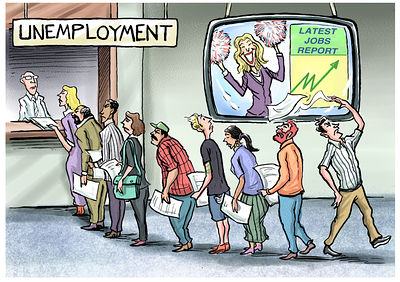
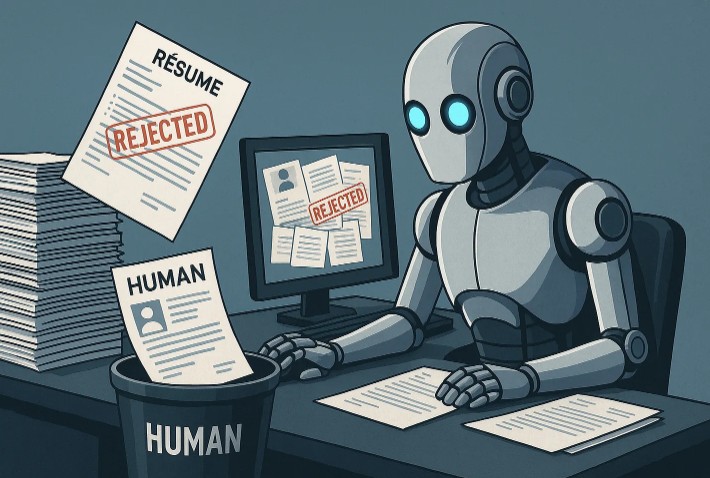
Looking for a job has always sucked, but now…
For millions of job seekers, the question is no longer, “Why can’t I get hired?” It’s become, “Am I even applying to a real job, or does my resume get lost in the ether?”
That question is gaining new attention when Texas Attorney General Ken Paxton opened an investigation into LinkedIn over allegations that the platform may have advertised and profited from “ghost jobs” while marketing Premium subscription services to job seekers. The investigation is examining whether consumers were misled by job listings that may not have represented genuine hiring opportunities. [foxbusiness.com]
The concerns extend far beyond a single platform. A growing body of research suggests that many online job postings may not represent active hiring at all.
The Ghost Job Problem Is Bigger Than Most Realize
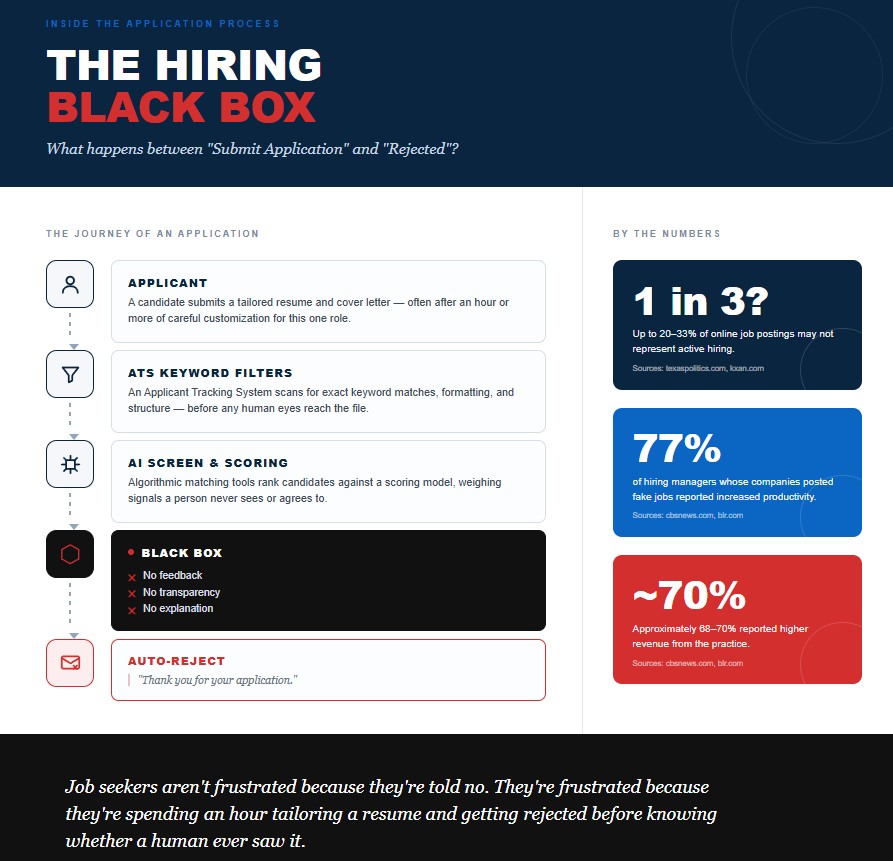
A “ghost job” is generally defined as a job posting that is not tied to an immediate hiring need, has already been filled, or was posted despite no intention to hire in the near term. According to materials cited by the Texas Attorney General’s office, independent studies estimate that roughly 20% to 33% of online job postings may fall into this category. [texaspolitics.com], [kxan.com]
Some independent analyses focused on LinkedIn job listings have estimated that approximately 27% of active U.S. postings may be ghost jobs, though methodologies vary and the exact percentage remains debated. [metaintro.com]
If those estimates are even partially accurate, millions of job seekers may be spending hours applying to positions that were never realistically available.
Why Post a Job you Don’t Intend to Fill?
The answer is uncomfortable.
According to a 2024 ResumeBuilder survey, 40% of hiring managers reported that their company had posted a fake job listing within the previous year, while 30% said their company currently had active fake listings. The motivations cited by hiring managers included:
- Creating the appearance that the company is growing.
- Appearing open to external talent.
- Building a database of resumes for future openings.
- Convincing employees that additional help is coming.
- Making employees feel replaceable. [resumebuilder.com], [cbsnews.com]
Even more troubling, many hiring managers surveyed believed the practice benefited their organizations. Among those whose companies posted fake jobs:
- 77% said the practice increased productivity.
- Approximately 68% to 70% said it increased revenue.
- About 70% considered the practice morally acceptable. [resumebuilder.com], [cbsnews.com]
For investors, a company with hundreds of open positions may appear to be expanding. For employees, new postings can signal that relief is coming. For job seekers, however, these listings can represent nothing more than wasted time.
The Hidden Cost: Hours of Unpaid Labor
The most frustrating part of today’s hiring process isn’t simply being rejected. It’s the amount of work required before a rejection ever arrives.
Job seekers are increasingly told they must tailor every application to pass Applicant Tracking Systems (ATS). That often means:
- Rewriting each resume to match keywords from the job description.
- Rearranging experience to align with employer preferences.
- Creating customized cover letters.
- Optimizing formatting so automated systems can accurately parse the document.
Anyone who has seriously searched for a job recently knows this process can take 30 minutes to an hour per application, sometimes longer.
That effort might be reasonable IF a human recruiter were reviewing every submission. But many applicants report receiving automated rejection emails within minutes of applying, raising obvious questions about whether a meaningful review occurred at all.
The Rise of the AI Gatekeeper
Technology was supposed to make hiring more efficient. Instead, many job seekers feel like they’re trapped in a system where algorithms evaluate them before a human ever has the chance.
An applicant may spend an hour customizing a resume, carefully matching qualifications and buzz words, only to receive a auto-rejection with no explanation as to why. The automated email doesn’t identify missing qualifications, whether the candidate was screened out by keyword matching, or explain whether the position has already been filled.
And if the job was a ghost posting to begin with, there may never have been a hiring decision to make. The result is a uniquely frustrating experience:
- You don’t know whether a person saw your application.
- You don’t know why you were rejected.
- You don’t know whether the role was actively hiring.
- You don’t know what to improve for next time.
The process asks candidates to continuously adapt, optimize, and refine their resumes while providing almost no feedback in return.
The Transparency Problem
Rejection itself isn’t the issue. Most job seekers understand that not every application will lead to an interview. The real problem is opacity.
Job seekers can invest dozens, sometimes hundreds, of hours tailoring resumes, writing cover letters, completing assessments, and preparing applications, only to find themselves staring at a generic email that provides no meaningful information.
When ghost jobs, automated screening systems, and one-click rejection workflows combine, the hiring process begins to feel less like a marketplace for talent and more like a black box.
People aren’t frustrated because they’re being told “no.” They’re frustrated because they’re spending time, effort, and stress tailoring and submitting a resume, getting rejected in ninety seconds, and never finding out whether a human being ever looked at it.
How Job Seekers Can Protect Their Time
While there is no perfect defense against ghost jobs, a few practical steps can help reduce wasted effort:
- Verify openings on the employer’s official careers page before applying.
- Be cautious of listings that remain unchanged for unusually long periods. (This is a practical observation, not a verified industry standard.)
- Track response rates and prioritize companies that demonstrate active engagement with candidates.
- Network whenever possible, since referrals may help bypass some automated screening barriers.
- Remember that a lack of response is not always a reflection of your qualifications; it may be a reflection of the hiring process itself. [metaintro.com], [jobstrack.io]
Conclusion
The Texas investigation into LinkedIn has brought renewed attention to a growing concern in the labor market: the possibility that a meaningful share of job listings may not represent genuine hiring opportunities. [kvue.com], [kxan.com]
But the larger issue is trust.
Job seekers are being asked to invest increasing amounts of time and effort into applications that may be reviewed by algorithms, receive no meaningful feedback, and in some cases may not correspond to real hiring activity at all.
If companies want better candidates, and if platforms want to maintain credibility, transparency must become part of the hiring process again. Until then, many applicants will continue to wonder whether they’re competing for a job, or simply competing for the chance to be seen.
References
- Texas Attorney General investigation coverage (KVUE) – Texas AG investigating LinkedIn over alleged ghost jobs. [kvue.com]
- Fox Business coverage of the LinkedIn investigation. [foxbusiness.com]
- KXAN coverage detailing the investigation and revenue figures. [kxan.com]
- ResumeBuilder survey on fake job postings and hiring manager attitudes. [resumebuilder.com]
- CBS News reporting on ghost jobs and ResumeBuilder survey findings. [cbsnews.com]
- BLR analysis of ghost jobs and survey results. [blr.com]
- Independent analysis of ghost job prevalence and labor market impacts. [metaintro.com]
- Texas Politics summary of the Paxton investigation and ghost-job estimates. [texaspolitics.com]