

MEDIA & PERSUASION
When Advertising Becomes Propaganda
A closer look at the messages shaping what we believe—and what we buy.
ad·ver·tīs·ing
/ˈæd.vɚˌtaɪ.zɪŋ/ · noun
Paid communication for a group of published or broadcast promotional materials intended to promote a product, service, or brand and influence an audience’s purchasing decisions.
prop·a·gan·da
/ˌprɑː.pəˈɡæn.də/ · noun
Deliberate, organized communication intended to shape an audience’s beliefs, attitudes, or actions in ways that advance the communicator’s interests.
“Where does persuasion end and manipulation begin?”
When advertising becomes manipulation of the people who might buy it
Turn on a television, scroll through social media, or watch a video online. We are all so used to seeing advertising, because it is part of our daily life, and it’s EVERYWHERE! One advertisement makes you laugh. Another warns that your family, your health, or your financial future could be at risk. A third presents a smiling expert, an impressive statistic, or a promise backed by “science.” Each takes a different approach, but each asks you to arrive at a conclusion to buy their product!
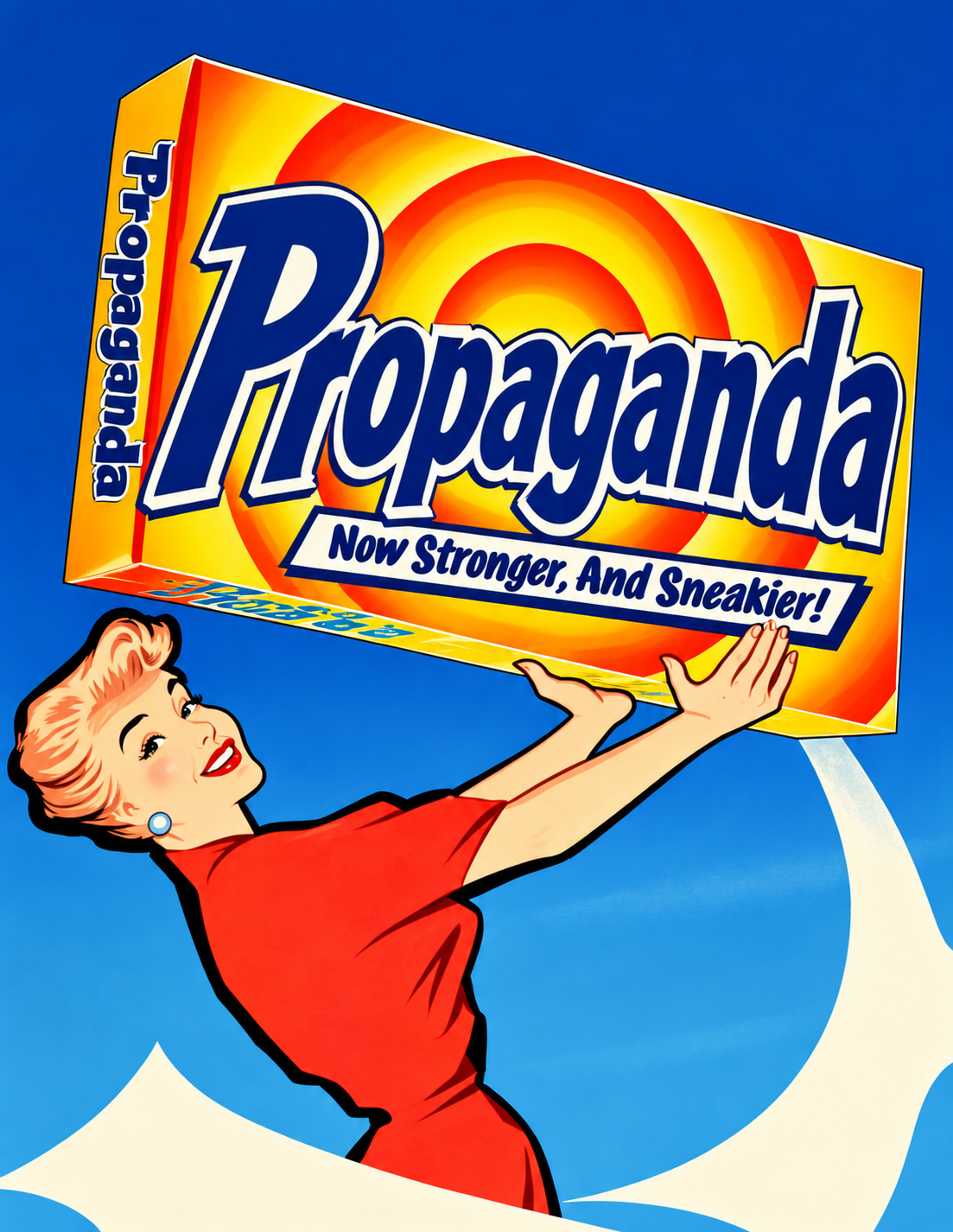
The concern becomes more sinister when an advertiser manufactures an insecurity, conceals a financial relationship, or gives you just enough information to feel informed while withholding what might change your decision.
So beneath the joke, the warning, or the reassuring numbers, lies a deliberate, strategic effort to influence what you believe and how you act.
A statistic can be accurate while leaving out essential context. A testimonial can describe one person’s experience while creating unrealistic expectations for everyone else. An enthusiastic recommendation can look independent even when the person delivering it was paid. The resulting impression may be far more persuasive than the underlying evidence deserves.
Documented Examples
The following cases should give us reason to examine the advertisements we have learned to tune out. Who chose the facts we are seeing? What information is missing? Whose interests does the message serve?
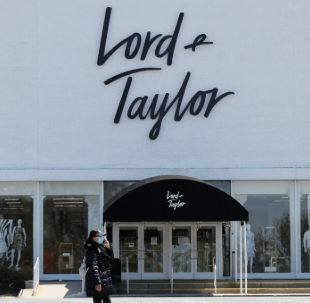
Lord & Taylor’s Hidden Advertising
The FTC alleged that the retailer paid for a seemingly independent Nylon article and paid 50 fashion influencers without adequate sponsorship disclosure. A final 2016 consent order required proper disclosure and prohibited misrepresenting paid messages as independent opinions. FTC final order announcement
Volkswagen’s “clean diesel” campaign
The FTC challenged environmental claims about cars fitted with illegal emissions defeat devices. In its 2020 final court report, the agency reported more than $9.5 billion repaid to buyers under the FTC orders. FTC final report summary

The examples above are only a few of MANY claims, accusations, legal action documented U.S. cases. Federal authorities have challenged unsupported scientific claims, undisclosed paid endorsements, and environmental promises contradicted by the products themselves. A federal court also found that major tobacco companies deceived the public about addiction and smoking’s health effects.
When advertising conceals those answers while systematically shaping our beliefs, the comparison to propaganda deserves serious attention.
There’s also evidence for “How” manipulation works
Repetition can increase perceived truth.
A 2010 meta-analysis examined 51 studies of the repetition-induced truth effect: repeated statements tend to be judged as more truthful. This supports a mechanism relevant to advertising, but does not mean every repeated slogan changes purchasing behavior. Dechêne and colleagues
Interface design can change consumer decisions.
In a randomized experiment involving American consumers, Luguri and Strahilevitz found that participants exposed to mild “dark patterns” were more than twice as likely to remain enrolled in a purported identity-theft protection plan; aggressive patterns produced nearly four times the enrollment of the control condition. Participants did not actually pay. This is evidence about manipulative sales design, which extends beyond the advertisement itself. Shining a Light on Dark Patterns, 2021
Manipulative design appears across many services.
Manipulative design appears across many services. A 2024 international regulatory review examined 642 subscription websites and apps. Nearly 76% used at least one possible dark pattern, and nearly 67% used multiple. This was a selected international sample, not an estimate of all U.S. advertising, and reviewers did not determine whether the practices were unlawful. FTC/ICPEN review
The FTC’s own report identifies tactics including ads disguised as editorial content, paid comparison rankings presented as neutral, buried terms, and countdown timers that imply a deadline where none actually exists. These give you concrete examples of manipulation beyond outright falsehood. FTC dark-patterns report
What the law actually requires—and why deceptive ads still appear
The FTC’s standard covers a representation, omission, or practice likely to mislead consumers acting reasonably in the circumstances, where the information is material to their decisions. Advertisers must also have a reasonable evidentiary basis before publishing objective claims, including reasonably understood implied claims. FTC advertising guidance, substantiation policy
The Federal Trade Commission (FTC) is a U.S. government agency that protects consumers and promotes competition. It investigates deceptive advertising, scams, unfair business practices, and anticompetitive conduct, and takes legal action to stop violations.
For advertising, the FTC generally requires claims to be truthful, supported by evidence, and presented without misleading consumers. It typically enforces these rules after ads appear rather than approving commercials beforehand
That leaves room for subjective praise and obvious exaggeration, commonly called puffery. “An amazing experience” and “clinically proven to reduce wrinkles” communicate different kinds of claims; the latter requires evidence. FTC explanation using the L’Oréal case
The FTC does not clear companies’ ads in advance. Consequently, an ad’s appearance on television or online does not establish government approval of its claims. FTC advertising FAQ
The tobacco case provides a particularly concrete example of delay: the court issued its injunction in 2006, but appeals delayed newspaper and television corrective statements until 2017. That supports an argument about the gap between spreading deception and correcting it. It does not, by itself, establish that enforcement always fails.
Before You Buy, Pause
That funny Super Bowl commercial may leave us with a memorable joke, a catchy slogan, or a sudden desire to buy. The question is what else it leaves behind: a belief we have not examined, a promise we have not checked, or a sense of urgency we did not have before. Humor and emotion can be part of honest advertising. The concern begins when a message hides who paid for it, leaves out information that matters, or presents confidence as a substitute for evidence.
We can enjoy the commercial and still pause before accepting its message. Who benefits if I believe this? What evidence supports the claim? What am I being encouraged to overlook? Asking these questions will not make us immune to manipulation, but it gives us a chance to recognize it. The next time an ad makes you laugh, worry, or reach for your wallet, take a moment to ask whether the message has earned your trust.
Like this post and interested in more content?
Works Cited
“Advertising FAQ’s: A Guide for Small Business.” Federal Trade Commission, www.ftc.gov/business-guidance/resources/advertising-faqs-guide-small-business. Accessed 9 Oct. 2026.
Dechêne, Alice, et al. “The Truth about the Truth: A Meta-Analytic Review of the Truth Effect.” Personality and Social Psychology Review, vol. 14, no. 2, 2010, pp. 238–57, doi.org/10.1177/1088868309352251. Accessed 9 Oct. 2026.
Fair, Lesley. “FTC to L’Oréal: Scientific Claims Need Proof That’s More Than Just Skin Deep.” Federal Trade Commission, 30 June 2014, www.ftc.gov/business-guidance/blog/2014/06/ftc-loreal-scientific-claims-need-proof-thats-more-just-skin-deep. Accessed 9 Oct. 2026.
“FTC Approves Final Lord & Taylor Order Prohibiting Deceptive Advertising Techniques.” Federal Trade Commission, 23 May 2016, www.ftc.gov/news-events/news/press-releases/2016/05/ftc-approves-final-lord-taylor-order-prohibiting-deceptive-advertising-techniques. Accessed 9 Oct. 2026.
“FTC, ICPEN, GPEN Announce Results of Review of Use of Dark Patterns Affecting Subscription Services, Privacy.” Federal Trade Commission, 10 July 2024, www.ftc.gov/news-events/news/press-releases/2024/07/ftc-icpen-gpen-announce-results-review-use-dark-patterns-affecting-subscription-services-privacy. Accessed 9 Oct. 2026.
“FTC Policy Statement Regarding Advertising Substantiation.” Federal Trade Commission, 23 Nov. 1984, www.ftc.gov/legal-library/browse/ftc-policy-statement-regarding-advertising-substantiation. Accessed 9 Oct. 2026.
“In Final Court Summary, FTC Reports Volkswagen Repaid More Than $9.5 Billion to Car Buyers Who Were Deceived by “Clean Diesel” Ad Campaign.” Federal Trade Commission, 27 July 2020, www.ftc.gov/news-events/news/press-releases/2020/07/final-court-summary-ftc-reports-volkswagen-repaid-more-95-billion-car-buyers-who-were-deceived-clean. Accessed 9 Oct. 2026.
“L’Oréal Settles FTC Charges Alleging Deceptive Advertising for Anti-Aging Cosmetics.” Federal Trade Commission, 30 June 2014, www.ftc.gov/news-events/news/press-releases/2014/06/loreal-settles-ftc-charges-alleging-deceptive-advertising-anti-aging-cosmetics. Accessed 9 Oct. 2026.
Luguri, Jamie, and Lior Jacob Strahilevitz. “Shining a Light on Dark Patterns.” Journal of Legal Analysis, vol. 13, no. 1, 2021, pp. 43–109, doi.org/10.1093/jla/laaa006. Accessed 9 Oct. 2026.
“Teami, LLC.” Federal Trade Commission, 22 Feb. 2022, www.ftc.gov/legal-library/browse/cases-proceedings/182-3174-teami-llc. Accessed 9 Oct. 2026.
“Tobacco Companies to Begin Issuing Court-Ordered Statements in Tobacco Racketeering Suit.” U.S. Department of Justice, 22 Nov. 2017, www.justice.gov/archives/opa/pr/tobacco-companies-begin-issuing-court-ordered-statements-tobacco-racketeering-suit. Accessed 9 Oct. 2026.