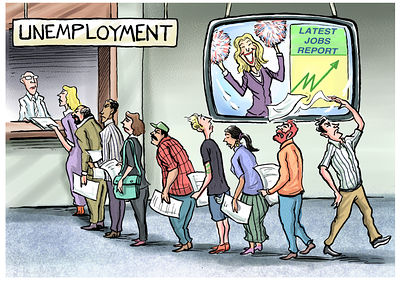

Imagine walking into a boardroom with this pitch: “We’ll build an economy that depends on millions of people showing up for work. They’ll stock the shelves, care for patients, deliver packages, and keep everything running. But a substantial share won’t have enough financial cushion to handle losing their income. Then we’ll celebrate how well the economy is doing.”
Someone at the table might ask whether those workers are doing well, too. “Excellent question,” you reply. “Have you seen the stock market?”
That’s the absurdity behind the satire: prosperity can make headlines while financial security remains out of reach for many households. An economy’s success deserves to be measured partly by how well people can withstand a setback. Mindfulness starts with noticing where we direct our attention—and whose struggles disappear behind a reassuring headline. Source: Federal Reserve
Household reality: “The economy is thriving, but can you really afford a setback?”
A car repair, reduced work hours, or a rent increase can quickly turn a manageable inconvenience into a crisis when there is little money left over.
In the Federal Reserve’s 2025 household survey, 55% of adults reported having savings for three months of expenses. 30% said they could not cover three months of expenses even through borrowing, selling assets, or other savings. Federal Reserve
High recurring costs make building savings difficult. Feeling financially comfortable today is different from being prepared for lost income.
Financial insecurity can constrain people’s practical choices. What does “freedom” mean when leaving a job could threaten basic necessities? It does not establish that everyone is one paycheck from disaster.
Work and assistance: “The person receiving help may have just finished their shift”
A paycheck does not guarantee independence from assistance… employment and public assistance frequently coexist.
Evidence: work and public assistance
A 2020 GAO report estimated that 12 million wage-earning adults were enrolled in Medicaid and 9 million lived in households receiving SNAP. About 70% of wage earners in each group worked at least 35 hours per week; roughly half worked full-time hours throughout the year. GAO

These historical findings challenge the idea that assistance recipients simply refuse to work. The Medicaid and SNAP groups overlap, so their totals cannot be added together.
So why does public anger so often target the recipient rather than the conditions that leave working households needing help?
Let’s look at who has the power to negotiate pay and shape policy.
Blaming the other team is good for engagement
A 2021 study of roughly 2.7 million Facebook and Twitter posts from news outlets and congressional accounts found that posts referring to political opponents were shared approximately twice as often as posts referring to their own political group. Rathje and colleagues, PNAS
Divisive messaging has measurable attention incentives. That helps explain why hostility spreads, but it does not establish a coordinated strategy to prevent worker solidarity or show the same effect across every current platform.
Public assistance can indirectly support low-wage business models. Employers may benefit from that support without deliberately keeping workers eligible.
How employers can benefit from public assistance
Public assistance supports workers, but employers can benefit indirectly too. When a paycheck leaves a household eligible for food or healthcare assistance, public programs help fill the gap. The evidence above shows why having a job and needing assistance can coexist. GAO
When we criticize the cost of helping working families, we should also examine the compensation practices that leave those families needing help.
Labor costs
Lower wages reduce payroll expenses. When workers qualify for SNAP or Medicaid, public programs help meet needs their earnings and benefits do not cover. Calling this an indirect subsidy to low-wage employment is an economic interpretation; assistance received is not automatically an equivalent saving for the employer.
Historical example: hiring tax credits
There have been specific hiring incentives. The federal Work Opportunity Tax Credit covered certain qualifying hires from SNAP-recipient households, generally offering up to $2,400 subject to certification and work requirements. The IRS page specifies employees beginning work on or before December 31, 2025. This is a historical example; it does not establish eligibility for new hires today. It rewards qualifying hiring, not keeping existing employees on assistance. IRS
Who benefits when wages fall short?
To what extent does public support help sustain business models built around low wages and limited benefits?
Workers bargain individually; employers have organizations
Union membership fell from 20.1% of wage and salary workers in 1983 to 10.0% in 2025. Median weekly earnings for full-time union members were $1,404, versus $1,174 for nonunion workers. BLS cautions that these differences also reflect occupation, industry, location, and other factors. Bureau of Labor Statistics
Collective representation has become much less common. The earnings comparison supports examining bargaining power, but it is not a controlled estimate of what joining a union would do to an individual’s pay. BLS also notes that 2025 estimates exclude October because of the government shutdown.
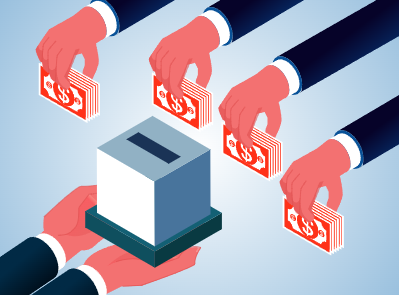
Money buys a much louder political voice
The FEC reported approximately $4.4 billion in independent expenditures during the 2023–2024 federal election cycle. Separately, Gilens and Page’s 2014 study found substantial independent associations between policy outcomes and the preferences of affluent Americans and business interest groups. FEC, Gilens and Page
Wealth provides resources for political messaging and influence. Spending totals do not prove purchased election outcomes. The political study uses historical observational data and affluent citizens as a proxy for economic elites; it does not show that voters never matter.
What would a successful economy actually deliver?
The satire imagines a boardroom where someone designed the whole arrangement. The more uncomfortable possibility is that no single boardroom is necessary. When employers benefit from lower labor costs, political influence requires expensive infrastructure, and divisive content attracts attention, separate incentives can reinforce the same unequal outcomes.
We should ask more of an economy than whether it produces wealth. We should ask whether the people doing its work gain security, time, bargaining power, and a meaningful say in its future.
Mindfulness includes noticing the stories that organize our attention. Before blaming the person receiving food assistance, ask why a paycheck may still leave them needing it. Before sharing the next post about how terrible the other side is, ask what it explains—and what it distracts you from.
Anger can identify an injustice. Attention helps us decide where to direct it.
Related reading
- The Working Poor: A Minimalized Workforce and a Silenced Voice
- One Vote, Unequal Influence: Money in U.S. Elections

Like this post and interested in more content?