
CONSUMER TECH & PRIVACY
Same product. Different price. Why?
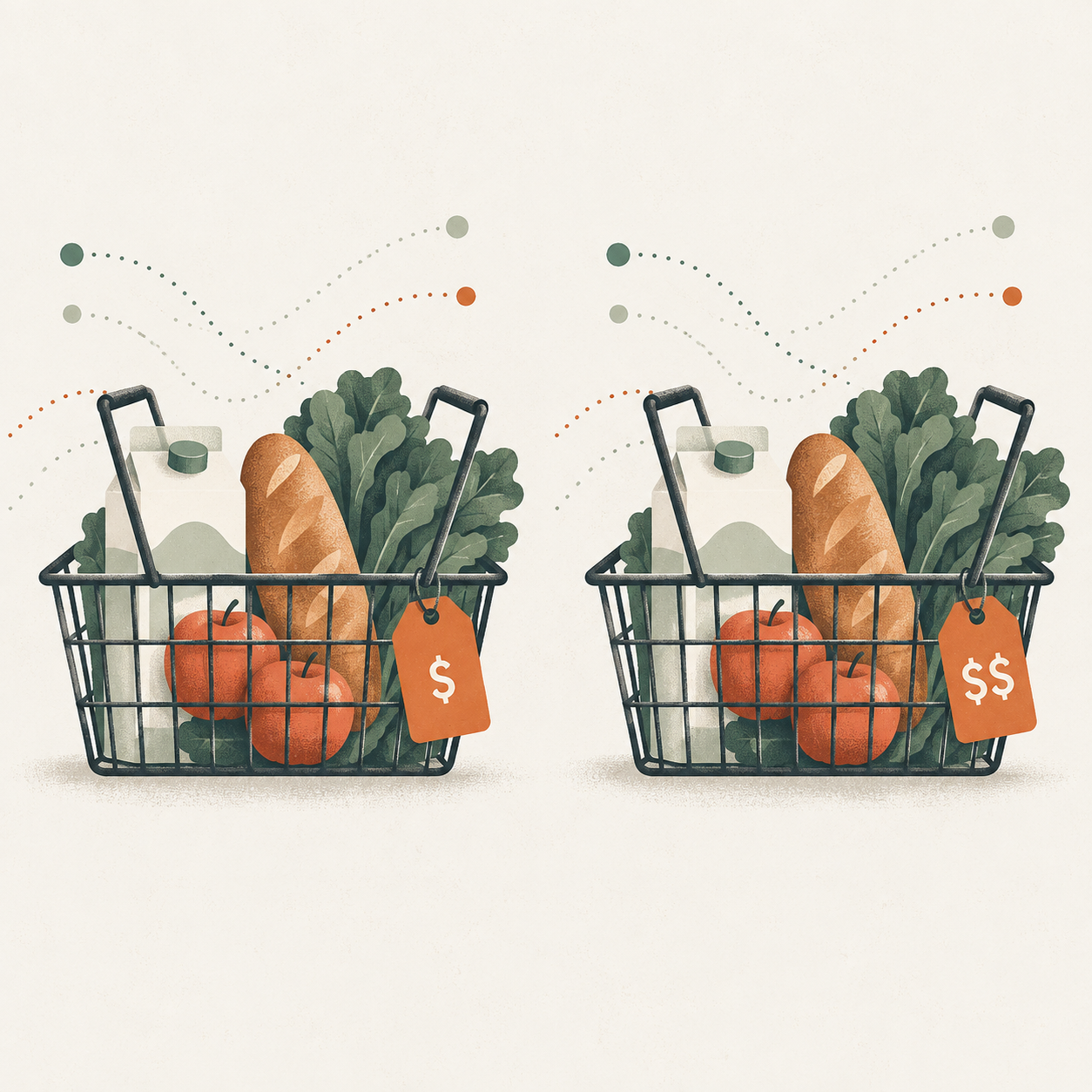
Your location, shopping history, and loyalty profile can influence the offers you see. Here’s what investigations reveal—and what remains unproven.
One route, 29 quoted prices
The Lyft Kansas City Test
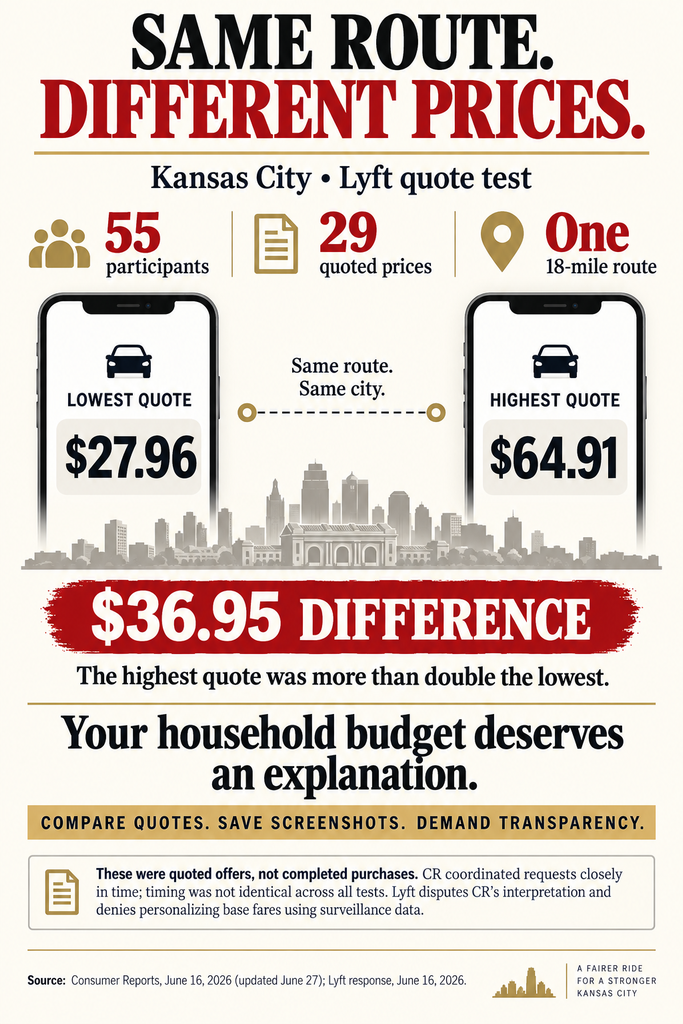
A Consumer Reports investigation found sharply different Lyft quotes for the same Kansas City route. What explains the gap—and what can shoppers learn from it?
Lyft disputes the findings and denies using surveillance data to personalize base fares. Different quotes alone do not prove surveillance pricing. Read Lyft’s response, or see the full case below for the figures and testing limitations.
What surveillance pricing actually means
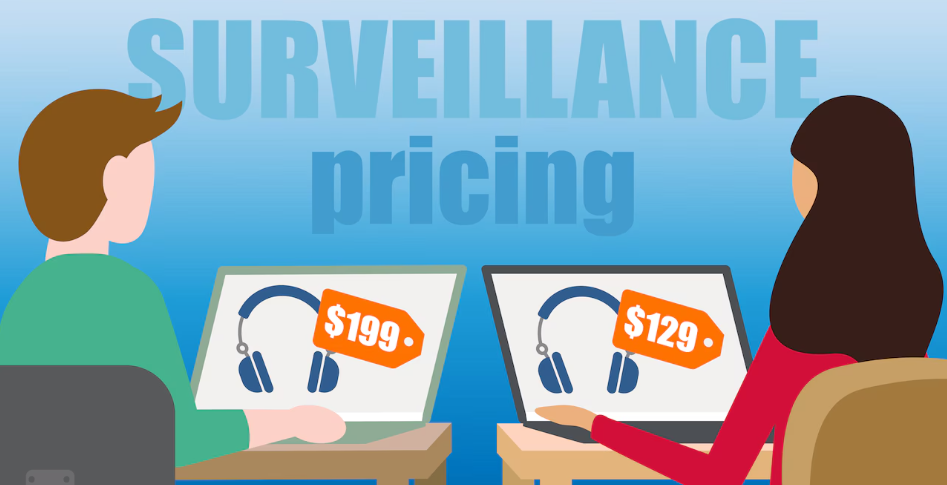
Surveillance pricing is the practice where companies collect personal data to set individualized, real-time prices for goods or services.
Unlike traditional dynamic pricing—which changes costs based on market-level supply, demand, or time—surveillance pricing changes what you pay based on who you are and how you behave.
These practices can overlap. Pricing algorithms predate today’s AI boom, and not every algorithmic price is surveillance pricing.
Four cases, four different lessons
These cases illustrate different pricing practices. Each raises a question about what shoppers can understand from an offer; they do not all establish surveillance pricing or the use of AI.
Staples, 2012 — The cost of fewer alternatives
The lesson: Your access to competition can affect your price, even when you shop online.
The observation: A Wall Street Journal investigation found that Staples displayed different online prices based on shoppers estimated locations. Customers near competing Office Depot or OfficeMax stores generally received lower prices. Areas receiving discounts also tended to have higher average incomes. Investigation reproduced in FTC-hosted materials.
The company’s explanation: Staples acknowledged geographic differences between its online and in-store prices, citing factors including the cost of doing business. Contemporaneous reporting.
The unanswered question: How much of the difference reflected operating costs, and how much reflected the ability to charge more where customers had fewer nearby alternatives?
Target, 2019 — Price changes at the store
The Lesson: A price comparison loses its value if the app changes the offer without making the reason obvious. Shoppers should not have to investigate their own shopping app to understand a deal.
The observation: KARE 11 news in Minneapolis found that Target’s app changed displayed prices for some products as shoppers approached or entered a store. In its test, a Dyson vacuum’s displayed price increased by $148. Four of the ten tested products showed increases. Investigation coverage.
The company’s explanation: Target explained that online and local store prices could differ and said it would update the app to make those distinctions clearer. This was a location-triggered switch between purchase channels, not demonstrated calculation of an individual shopper’s maximum willingness to pay. Follow-up reporting.
The unanswered question: How many shoppers paid the higher price without realizing that a lower online price existed—and did clearer labels adequately solve that problem?
Kroger, 2025 — What your loyalty card reveals
The lesson: The shelf price does not have to change for customers to pay different amounts. Unequal access to coupons can create unequal final prices.
The observation: Consumer Reports documented extensive loyalty-customer profiling, including a 62-page profile containing inferred information about income, education, and household characteristics. Some inferences were inaccurate. Its investigation raised concerns about how these profiles could affect access to personalized discounts. CR investigation summary, CR testimony describing the profile.
The company’s explanation: Kroger’s corporate disclosures describe its data-driven marketing business as a way to deliver targeted, measurable advertising. Its responsible-business reporting presents loyalty rewards as a source of customer savings. These statements explain its business rationale; they do not establish how every inferred characteristic affects an individual offer. Kroger annual filing, responsible-business report.
The unanswered question: Which profile characteristics determine who receives a discount, and can shoppers discover and correct inaccurate assumptions that influence their offers?
Lyft, 2026 — One route, 29 quoted prices
The lesson: A nearly $37 difference matters to a household budget. An explanation is useful only if shoppers can evaluate it.
The observation: Consumer Reports found 29 different quoted prices among 55 participants checking an 18-mile Kansas City route. Quotes ranged from $27.96 to $64.91—a $36.95 difference. These were offers, not completed purchases. Testing was closely coordinated, but requests were not uniformly simultaneous across the investigation. CR findings, detailed investigation.
The company’s explanation: Lyft denies using surveillance data to personalize base fares and acknowledges personalized promotions. It challenged CR’s methodology, arguing that many people checking the same route could influence demand estimates and the resulting quotes. Lyft’s response.
The unanswered question: How much of the gap came from changing marketplace conditions, personalized promotions, or other pricing inputs—and could an independent audit establish the contribution of each?
How shopping data becomes a pricing input
Shopping information can help businesses decide which price, discount, or product to show us. In January 2025, Federal Trade Commission (FTC) staff released preliminary findings describing these capabilities and their implications for privacy, competition, and consumers. Here are five findings worth understanding.
What these findings do—and don’t—show: These are initial findings about intermediaries and capabilities, not illegal conduct or proof that Staples, Target, Kroger, and Lyft each use every described technique. FTC research summary, pp. 1–2.
1. Loyalty can become a reason to withhold a discount
FTC staff describe tools that can exclude likely repeat buyers from promotions. Their pharmacy example is hypothetical, illustrating a capability rather than an identified retailer’s conduct. FTC research summary, p. 3.
Why it matters: Being a dependable customer may make a company believe it no longer needs to offer you a discount.
2. Companies can estimate how sensitive you are to price
Staff describe potential personalized prices, discounts, or quotes based on customer characteristics, interactions, purchases, and estimated price sensitivity.
Why it matters: A price may reflect market conditions, predictions about the buyer, or both. This research does not establish that a company can accurately calculate everyone’s maximum willingness to pay.
3. Vendors themselves describe higher prices as a business benefit
Research described revenue growth through higher prices and increased sales, alongside cost reductions. Multiple respondents claimed revenue growth of 2–5%; these are vendor claims, not independently verified consumer losses. FTC research summary, p. 10.
Why it matters: Vendors market these tools as a way to grow revenue. That claim does not tell us how the benefits and costs are distributed among shoppers.
4. Even your mouse movements and abandoned cart can become inputs
The FTC’s announcement identifies precise location, browsing history, mouse movements, and unpurchased cart items as information that can inform tailored pricing. It also describes steering shoppers toward more expensive products. FTC announcement, January 17, 2025.
Why it matters: Ordinary shopping behavior can become something a business interprets and acts upon—even when you have not entered information into a form.
5. There is an established commercial market for these tools
The examined intermediaries collectively served at least 250 clients across consumer and business markets. FTC announcement, January 17, 2025.
Why it matters: These tools have an established commercial reach. That does not mean 250 retailers all individually personalize prices.
The grocery aisle is becoming part of the data economy
Smart carts can connect shopping trips with loyalty accounts and personalized promotions. These features can make shopping easier and offer savings; they also bring more in-store behavior into data systems. They do not, by themselves, prove that a store is raising anyone’s prices. See Instacart’s description of deployed smart-cart features.
You work for every dollar, and Life is Already Expensive
“Shop around” sounds simple—until you are buying groceries between shifts, arranging childcare, or trying to get home without a car. Comparing offers takes time. Traveling to another store costs money. Walking away is harder when the purchase is something your household needs today.
That is why surveillance pricing deserves attention as a working-class issue. A person’s willingness to pay does not necessarily reflect what they can comfortably afford. Sometimes it reflects how few alternatives they have.
The FTC’s preliminary findings raise a question: Could the constraints that make it difficult to shop around become inputs to a pricing decision?
Your budget should not require detective work
Consider a hypothetical household spending $150 a week on groceries. An additional $5 each week would total $260 a year. That is an illustration, not a measured surveillance-pricing surcharge. It shows why even modest differences deserve scrutiny when a family has little room in its budget.
Personalization can deliver discounts. Companies should explain who qualifies and when personal information affects an offer, and give shoppers a way to correct inaccurate information.
Consumers can compare prices and save receipts. They should not have to maintain multiple accounts, test different devices, or investigate a pricing algorithm to feel confident about buying necessities.
Working people deserve clear prices, understandable discounts, and a meaningful choice about whether their personal information helps determine what they pay.
A quick checklist for comparing offers
- Compare equivalent offers. Check the same item or service, timing, location, fees, and purchase channel.
- Check the discount conditions. Note whether an offer depends on a loyalty account, promotion, or online versus in-store purchase.
- Save the details. Keep dated screenshots or receipts showing the offer and its conditions.
- Ask for an explanation. A difference is a reason to ask questions; it is not, by itself, proof of surveillance pricing.
Have you seen an app price change when you entered a store?
What changed, and what explanation did the company give you? Share your experience in the comments, leaving out personal or account information.

Like this post and interested in more content?
References
- Collins, Bob. “Target App Raises Prices When You Walk into a Store.” NewsCut, Minnesota Public Radio, 8 Feb. 2019.
- “Consumer Reports Investigation Reveals Uber and Lyft AI-Driven Pricing Tactics Lead to Significantly Different Prices.” Consumer Reports, 16 June 2026. Press release.
- “Consumer Reports Investigation Uncovers Kroger’s Widespread Data Collection of Loyalty Program Members to Create Secret Shopper Profiles.” Consumer Reports, 21 May 2025. Press release.
- FTC Surveillance Pricing 6(b) Study: Research Summaries. A Staff Perspective. Federal Trade Commission, Jan. 2025.
- “FTC Surveillance Pricing Study Indicates Wide Range of Personal Data Used to Set Individualized Consumer Prices.” Federal Trade Commission, 17 Jan. 2025. Press release.
- Gedye, Grace. Testimony in support of Hawai‘i House Bill 2458. Consumer Reports, 23 Mar. 2026.
- Kravitz, Derek. “Different Prices for the Same Ride: How Uber and Lyft Use AI to Get More Money Out of You.” Consumer Reports, 27 June 2026.
- Kroger Co. 2025 Responsible Business Report. 2025.
- Kroger Co. Annual Report on Form 10-K for the Fiscal Year Ended January 31, 2026. EDGAR, U.S. Securities and Exchange Commission, 31 Mar. 2026.
- Patil, Sid. “Let’s Talk About Lyft Pricing.” Lyft, 16 June 2026.
- “Schnucks Expands Caper Carts to New Stores Across Missouri and Illinois.” Instacart, 24 Apr. 2025.
- Spring Privacy Series: Alternative Scoring Products. Federal Trade Commission, 19 Mar. 2014. Workshop slides.
- “The Target App Price Switch: What You Need to Know.” Valley News Live, 1 Feb. 2019.
- Valentino-DeVries, Jennifer, et al. “Websites Vary Prices, Deals Based on User’s Information.” The Wall Street Journal, 24 Dec. 2012. Reproduced on Good Times Web.